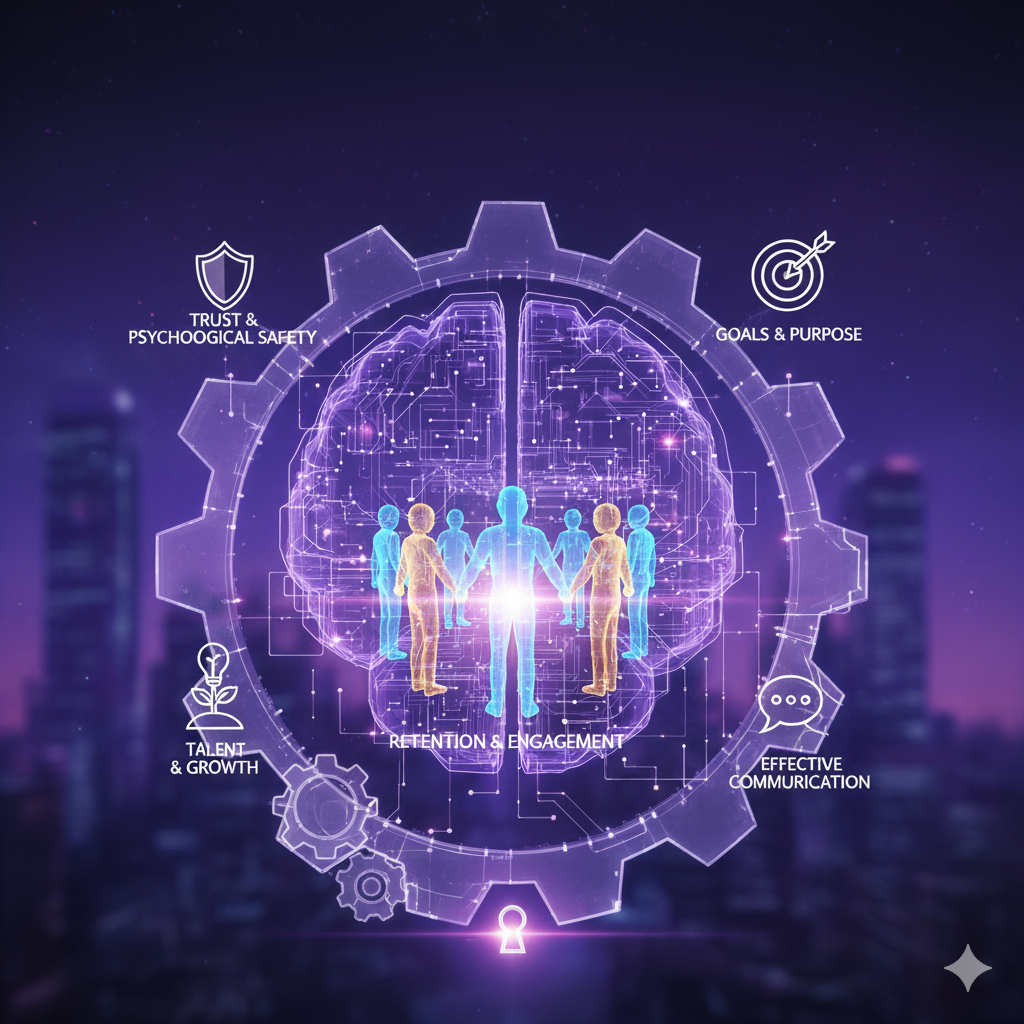
No company in today’s fast-moving business environment is under more pressure to innovate, adapt, and deliver meaningful results than ever before. Yet perhaps the most powerful driver of performance is not technology, automation, or strategy-it’s people. More precisely, it’s the diversity of the people in the workforce and how well organizations create environments where those people can contribute, collaborate, and thrive.
Diversity and inclusion have moved a long way from being merely the buzzword, the requirement for compliance, and the HR initiative.
It is a competitive advantage-one that will directly drive creativity, decision-making, talent retention, brand reputation, and long-term business success. The companies that understand this are the ones leading not just their respective industries but the future of work itself.
In this blog, we look at why D&I matters, how it strengthens teams, and why the most successful organizations treat D&I as a core business priority rather than an optional add-on.
1. Diversity drives better problem-solving and innovation.
When teams are made of people from the same backgrounds, perspectives, and ways of thinking, chances are that they will look at challenges similarly. While that may feel more comfortable for them, this restricts creativity and leads to repetitive and predictable decisions.
Research has consistently proven that the opposite dynamic produces superior results:
According to Boston Consulting Group research, above-average diversity companies had 19% higher innovation revenue.
According to McKinsey’s research into global companies, diverse leadership teams are likely to outperform their competitors financially by 35%.
The reason is simple:
Different outlooks bring different ideas.
Diverse ideas lead to better solutions.
A diversified workforce comprising varied cultural experiences, educational backgrounds, age brackets, sexes, and life experiences creates a wider pool of insights. This becomes much more of a strategic asset when teams have to grapple with complex challenges: developing new products or enhancing user experience and operational inefficiencies.
Diverse teams question assumptions, challenge limitations, and widen the creative lens.
2. Inclusion Ensures Those Ideas Are Heard, and Acted Upon
Yet, it is not diversity alone. A team can be formed by people coming from different walks of life; however, when only a few voices are being predominantly heard, it defeats the very purpose.
This is where inclusion becomes vital.
Inclusion means:
People feel safe sharing ideas.
Their input is welcome and is valued.
They all have equal opportunities, resources, and recognition.
This self-selection is one of the strongest predictors of:
Better quality interviews
Faster hiring decisions
Better long-term retention
Without inclusion, diversity becomes symbolic, not impactful.
Inclusion translates diversity into performance.
Organizations that have high inclusion cultures:
Build trust with much ease.
Experience more collaboration
Reduce interpersonal friction and miscommunication
Make decisions that consider broader impacts and realities.
A place where voices get heard is where people are more engaged.
3. Stronger Talent Attraction and Retention
More than for salary or job titles, top professionals in a competitive hiring market look for workplaces where they feel:
Respected
Supported
Able to grow
Represented
Companies valuing D&I attract a wider and deeper talent pipeline that appeals to candidates of all backgrounds who may otherwise have self-selected out of the application process.
Real data supports this shift:
According to Glassdoor, 67% of active job seekers consider workplace diversity when deciding whether to accept a job offer.
Deloitte found that organizations with inclusive cultures are 6 times more likely to retain their employees long-term.
Retention is a competitive business advantage.
For every employee retained, the organization saves:
Recruitment costs
Training costs
Productivity disruption
Inclusion is not only morally correct, but it also makes financial sense.
4. Better Decision Making and Reduced Risk
Teams that think alike often reach a decision quite quickly, but speed does not necessarily mean accuracy.
Homogenous teams:
Make faster decisions with increased risk of blind spots
Are more susceptible to groupthink.
Overlook unintended outcomes or alternative solutions
Meanwhile, diverse teams:
Consider decisions more deeply
Consider more views before acting.
Catch potential risks earlier
Indeed, according to the Harvard Business Review, various studies have shown that diverse teams outperform individuals in decision-making up to 87% of the time.
This does not slow organizations down, but rather bolsters their strategic choices.
In a world defined by volatility and complexity, rigorous thinking is a competitive edge.
5. Stronger Company Reputation and Brand Identity
Today’s customers are increasingly conscious of the values of the brands they support.
They want to buy from companies that:
Behave ethically
Reflect real-world diversity
Support equal opportunity
Contribute to society
A visible commitment to diversity and inclusion enhances:
Brand trust
Credibility
Public perception
Customer loyalty
It widens the businesses’ reach to new markets and demographics.
When organizations hire and promote people who reflect the world around them, they build brands that feel authentic, relatable, and socially responsible.
6. How Organizations Can Strengthen Diversity and Inclusion -Practically
Meaningful D&I does not come from slogans or statements; it requires intentional structures and ongoing effort.
Businesses can begin to reinforce their workforce in the following ways:
Widening of talent sourcing beyond limited networks
This widens the access to skilled professionals that otherwise might have been overlooked.
Standardization of nondiscriminatory hiring practices
Clear evaluation criteria reduce bias and create equal opportunity.
Training leadership to support diverse teams
Managers form work environments; thus, their awareness is critical.
Creating mechanisms for feedback in which employees can talk freely
Inclusion is where voices are heard and respected.
Reward collaboration and shared success, not competition
Healthy teams grow together, not against each other.
7. The role of hiring ways to build diverse high-performing teams
At Hiring Ways, we understand that diversity is not a hiring trend but a capability advantage. Our recruiting strategy focuses on finding talent that brings unique strengths, perspectives, and problem-solving styles to organizations.
We help companies:
Expand their talent pipeline.
Assess candidates holistically, beyond traditional checklists.
Build inclusive hiring processes that underpin long-term success.
Strengthen team culture in line with business objectives.
Our mission is not simply to fill positions but also to help companies build teams that are resilient, innovative, and growth-driven.
Conclusion
Diversity and inclusion aren’t solely HR priorities or social commitments. They’re the bedrock of better performance, smarter strategy, stronger culture, and sustained business growth.
A workforce of diverse perspectives, and one in which each person can make valuable contributions, can solve tough problems, adapt to change, and lead in competitive markets.
Companies that prioritize D&I are not just being progressive.