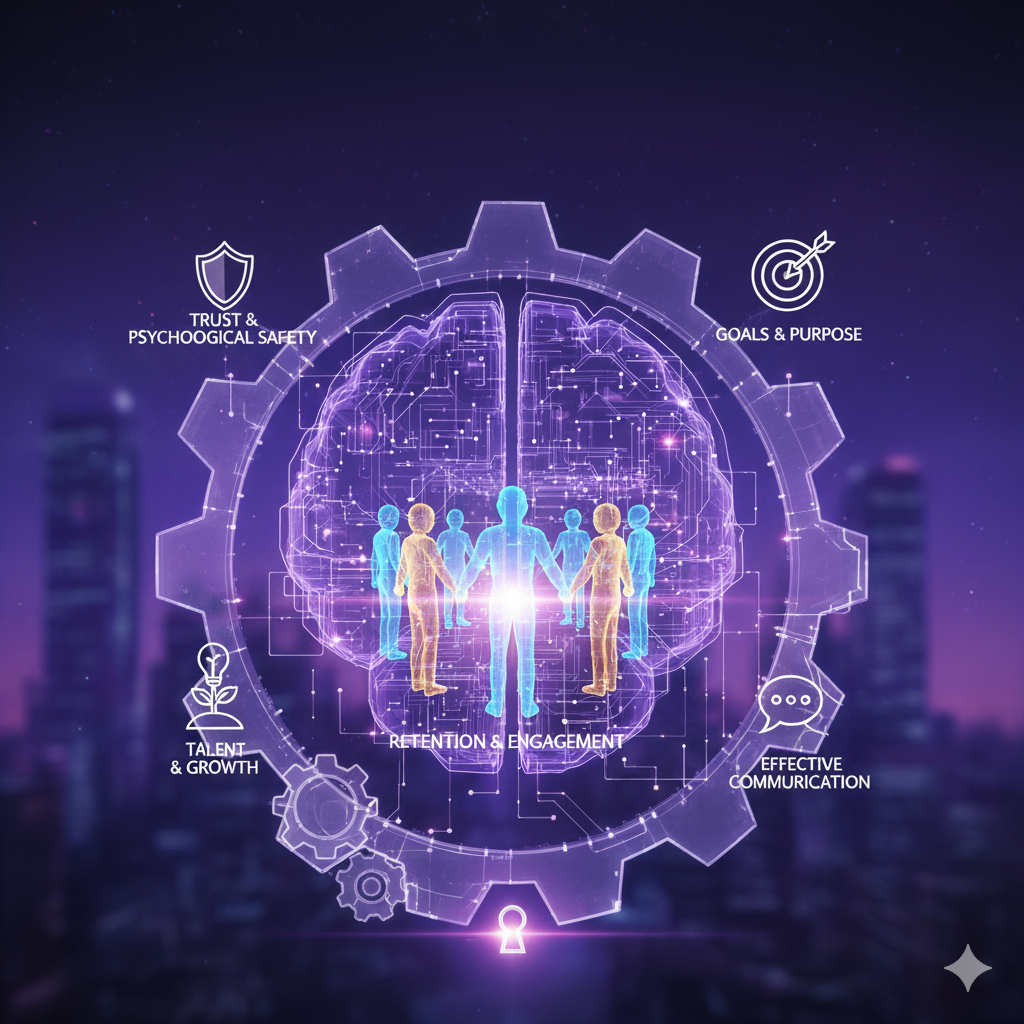
In this ever-changing work environment, feedback is the foundation for growth-from individuals up to organizations.
It’s not just about performance management, but rather a cultural philosophy that defines how teams communicate, improve, and achieve long-term success.
The companies that succeed are those that do not just appraise performance but develop people.
They create feedback-driven work cultures where communication is open, improvement continuous, and every employee feels supported on their journey to grow.
At Hiring Ways, we’ve seen firsthand how organizations that create a continuous feedback culture have stronger teams, higher engagement, and better results. Not just giving feedback is what matters; it is about creating that culture of trust where feedback is welcomed and expected, and it acts as a catalyst to progress.
1. Why Feedback Matters More Than Ever
Workers today want growth, mentorship, and purpose.
According to a study by Gallup, 80%of the employees who regularly receive meaningful feedback feel more engaged at work, organizations that place emphasis on regular feedback report 14.9% lower turnover rates.
Yet, for all its importance, far too many places continue to treat feedback as a formality-a thing done annually or quarterly at performance review time. This approach, in particular, leads to anxiety, defensiveness, and missed opportunities.
Done properly, feedback is not about judgment.
It’s about development.
It’s how leaders communicate.
“I believe in your potential, and here’s how you can grow even more.”
In a time when the competition for top talent is fierce, the ability of the company to drive personal and professional growth through feedback will be one of the major differentiators.
2. What a Feedback-Driven Culture Really Looks Like
A feedback-driven workplace is not one which relies on sporadic reviews and last-minute evaluations.
It relies on a regular, two-way flow of information that nurtures relationships and fuels learning.
Here’s what defines such a culture:
Transparency: Feedback is open, honest, and part of daily conversation.
Safety: means that employees feel secure to give and receive feedback without fear.
Balance: Appreciation should be balanced with constructive guidance.
Frequency: Conversations are happening continuously, not only during review cycles.
Action: Results of feedback are a quantifiable growth and change, not just words.
It changes the way teams work when feedback is encoded in the firm’s DNA.
Managers become mentors rather than supervisors.
The employees are able to move away from just doing their jobs and contribute by being actively involved in bringing about success for themselves.
This is a cultural evolution that does not happen by accident, it’s built on purpose.
3. Laying the Foundation: Trust and Psychological Safety
There needs to be trust before feedback will be effective.
Employees must feel that feedback is given to help, not to hurt.
According to Harvard Business Review research, teams with high psychological safety perform 27% better than other teams. Why? Because members feel safe to share ideas, admit mistakes, and challenge norms — without fear of embarrassment or retribution.
To instill trust in feedback:
Lead by example: Leaders should go first. When the managers model the behavior themselves, it gives a powerful cue that feedback is something everybody does, not something one-way.
Normalize imperfection: Errors should be regarded as learning opportunities, rather than punishable offenses.
Demonstrate follow-through: Where feedback leads to visible change, trust increases.
Trust turns feedback from a formality into a growth dialogue, one that strengthens commitment and teamwork.
4. Making Feedback a Continuous Practice
Improvement isn’t one of those things you check off once a year in a feedback-driven workplace; it’s continuous.
Following are some proven ways to build regular feedback habits:
Weekly one-on-ones: Short, structured meetings focused on goals, wins, and challenges.
Real-time feedback tools: platforms such as Lattice or CultureAmp make feedback a daily routine.
Peer-to-peer recognition: Colleagues appreciating their peers creates a culture of gratitude.
Pulse surveys: quick, anonymous feedback loops that measure sentiment and engagement.
The key is frequency and relevance.
A short and specific remark directly after a project is much stronger than a detailed review months later.
Continuous feedback transforms the relationship from compliance-based to growth-oriented between employee and employer.
5. Balancing Positive Reinforcement and Constructive Guidance
Feedback isn’t always about what’s wrong, in fact, the best places to work use it to point out what is working.
Positive Reinforcement:
Builds confidence
Encourages repeated good behavior
Creates emotional connection and loyalty
Constructive feedback:
Explains expectations
Identifies blind spots
Paves a path to improvements
The best managers have mastered the balance of giving praise where it’s warranted and guidance when it is needed.
A well-timed “You handled that situation really well” can be just as valuable as “Here’s how we could improve next time.”
Remember:
“Feedback should always leave the person motivated, not defeated.”
It’s not just about correction; it’s about direction.
6. Empowering Employees to Give Feedback Too
A truly feedback-driven culture isn’t one-sided.
It means being able to speak up, share insights, and give feedback upward, to the managers and leadership.
Encouraging upward feedback creates:
Better leadership self-awareness
Early identification of internal challenges
A sense of ownership and equality
But employees will only give feedback when they truly feel it will be heard and valued.
That’s where systems, tone, and example-setting come in.
Leaders can facilitate openness in communication by:
Asking open-ended questions like:
“What can I do to support you better?”
“How might we make this process smoother next time?”
Respond with gratitude, not defensiveness.
Acting on the feedback received
When the leaders are vulnerable, the employees respond with honesty, that’s where true growth begins.
7. Measuring the Impact of a Feedback Culture
Like any strategic initiative, feedback culture has to show results.
The impact can be measured by organizations through:
Employee engagement and satisfaction
Turnover and retention rates
Performance improvement trends
Internal promotion rates
Team collaboration scores
According to LinkedIn’s Global Talent Trends Report, companies with strong feedback cultures are 31% more likely to have highly engaged employees and 12% more productive teams.
It is not just about making people feel good, but about building a smarter, more agile workforce.
8. How Hiring Ways Helps Companies Build Feedback-Driven Cultures
At Hiring Ways, we believe that recruitment and development are the two sides of the same coin. We help organizations not only find the right talent but also create an environment where that talent thrives.
Through strategic consulting and recruitment partnerships, we support companies in:
Defining clear performance and feedback frameworks.
Training leaders to deliver effective feedback.
Designing roadmaps for employee growth.
Embedding feedback systems into team culture.
Our approach makes sure the people you hire today keep growing tomorrow. This reduces turnover and increases performance over time.
That’s because hiring great people is only half the journey.
It is retaining and developing them that builds great organizations.
Conclusion
A feedback-driven workplace doesn’t just magically appear, it’s built from a mix of intentional leadership, trust, and continuous communication.
When feedback becomes part of everyday culture, teams can move faster, individuals grow stronger, and organizations experience success more sustainably.
The companies that invest in honest, supportive, and actionable feedback systems will indeed gain improved key performance metrics. But more importantly, they create a workplace where people actually want to stay and grow.
At its best, feedback isn’t criticism.
It’s care in action.
It’s the language of progress, and that’s the base of every successful team.